SLAVIC MYTHOLOGYVELES WORLD / FIELD JOURNAL / ISSUE 06
Veles: Knowledge, Prosperity and the Strength of the Earth
Veles cannot be reduced to one word. He belongs to prosperity, craft, memory, forest silence and knowledge that never needs to be performed.
10 MIN READ / 06/02/2025

01
Wealth no one can take
Early Rus sources call Veles, or Volos, the “cattle god”. For people of that time cattle meant more than animals: food, labour, exchange and a chance to survive the winter. That is why he is directly tied to prosperity.
But the more interesting reading starts there. Velesian wealth is not merely something in your hand. It is skill, lived experience, family memory, craft and the ability to build again after a loss.
02
Not second in a ranking. A different pole.
The question of who ranked first is modern and does not fit a pagan world very well. Treaties between Rus and Byzantium invoked Perun and Volos. That pairing alone signals Veles’ exceptional standing.
Perun is height, thunder, boundary and impact. Veles is depth, earth, herds, trade, transition and concealed knowledge. Not good versus evil, but two forces whose tension keeps the world dimensional.
“Veles is not about wealth you display. He is about knowing how to make it again.”
VELES WORLD / EDITORIAL
The forest retinue: bear, wolf and raven

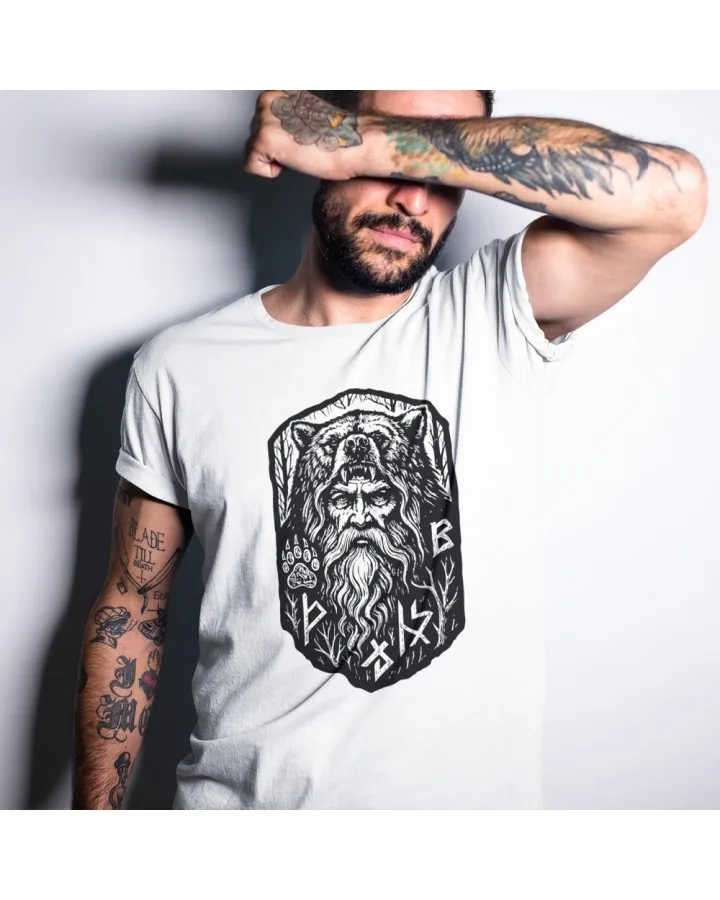
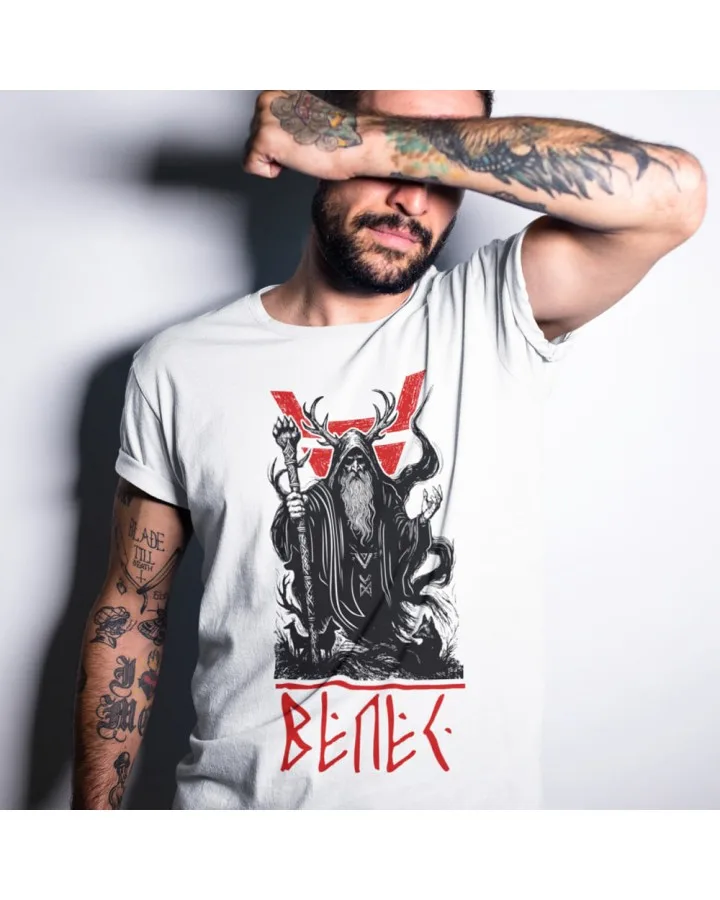
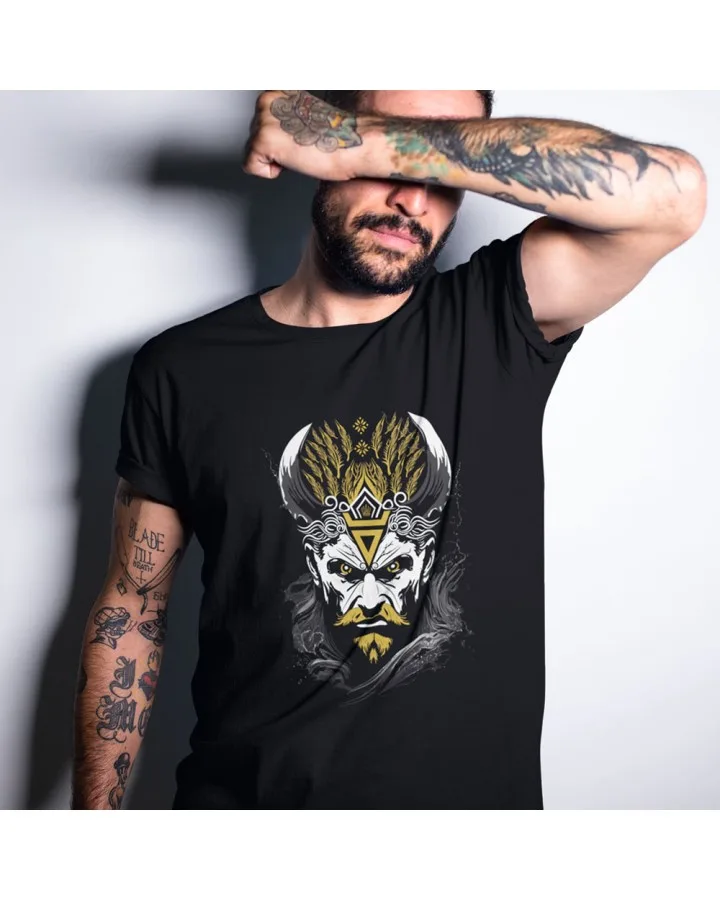
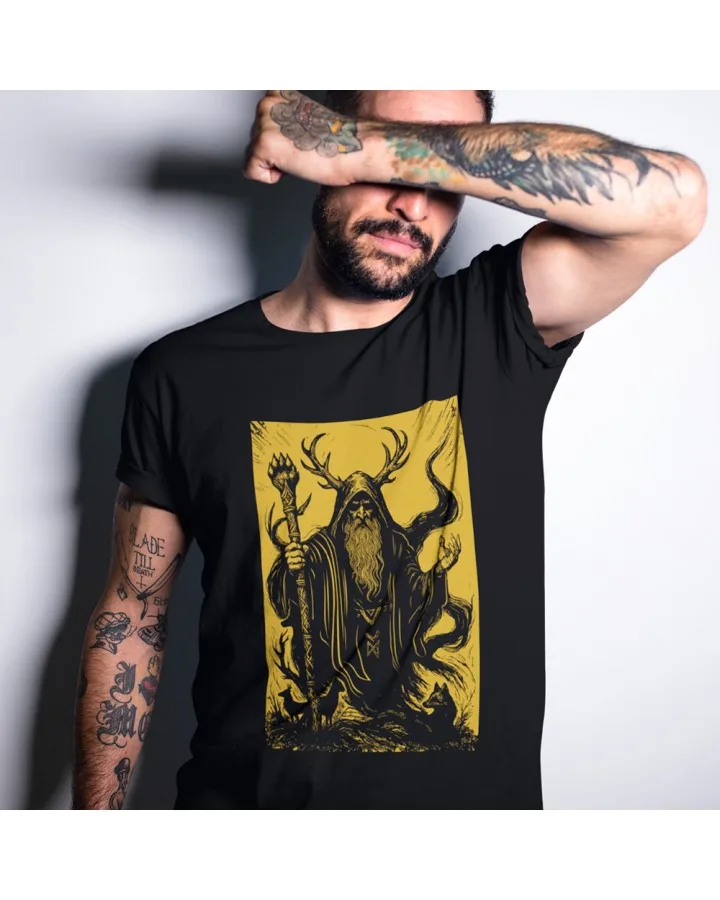
Old texts did not leave us an exact portrait of Veles, so the modern elder in furs with a staff and a heavy gaze is an artistic reconstruction. It still works: this is strength that has been lived through, not performed.
The bear carries endurance and the force of a place. The wolf carries path, instinct and loyalty. The raven carries memory and a longer gaze. Their ties to Veles are stronger in contemporary art than in written evidence, and that distinction matters.
THREE ANIMALS / THREE GESTURES- BEAR / strength without noise
- WOLF / path, instinct, pack
- RAVEN / observation and memory


04
A symbol needs an honest caption
Veles is often paired today with a bear paw, horns, solar motifs and other “seals”. Yet not every popular modern sign has an unbroken archaeological attribution to Veles. That does not weaken the sign; it separates today’s cultural code from a tenth-century source.
That is the editorial point: do not pass fantasy off as a museum label. Mark where fact ends and let an image remain alive.
05
A myth that still works
In reconstructed Perun-and-Veles narratives, the thunder god pursues an earthly, changeable force near water, stone and roots. It is not a preserved “book of Slavic myths”, but an academic reading of linguistic and folklore traces. We know the function of the image better than a finished plot.
Today Veles lives in graphics, tattoos, clothing and objects. Not as an attempt to dress like the tenth century, but as a personal code: protect your craft, remember where your strength grows, and do not confuse volume with weight.

CHOOSE YOUR CODE
VIEW THE COLLECTION ↗