SLAVIC MYTHOLOGYVELES WORLD / HISTORY AND ROOTS / ISSUE 05
Perun in Slavic Tradition: God of Thunder, Strength, and Unbreakable Will
For an ancient person, thunder over the forest was never just sound. It was a sign of a force no one could ignore.
8 MIN READ / 05/12/2025
01
Strength with a measure
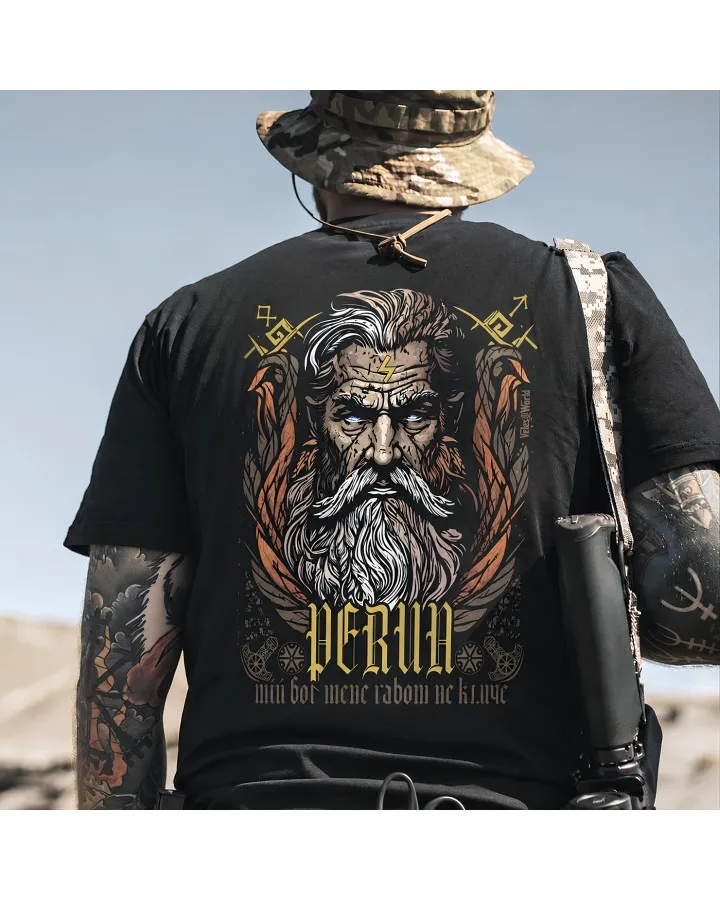
In East Slavic tradition, Perun was linked to thunder, lightning, rain and heavenly authority. Yet his image is larger than a weather god: chronicles place him beside the prince, the retinue, weapons, oaths and warrior honour.
In Kyiv around 980, his idol stood first in Vladimir’s princely pantheon. That is important evidence, but not proof of one uniform Slavic church. The sources are scarce and regional traditions could differ.
02
Why Perun?
Because he embodied a force a warrior society understood. He strikes with lightning, punishes a broken oath, guards order and stands beside weapons and the princely retinue.
A storm expresses that logic perfectly: tense silence, then an impact after which no one can pretend nothing happened. Perun is not random cruelty, but the power to protect one’s word, land and people.
“Perun is not war for war’s sake. He is the strength that strikes when order has been broken.”
VELES WORLD / EDITORIAL

03
The axe as a sign
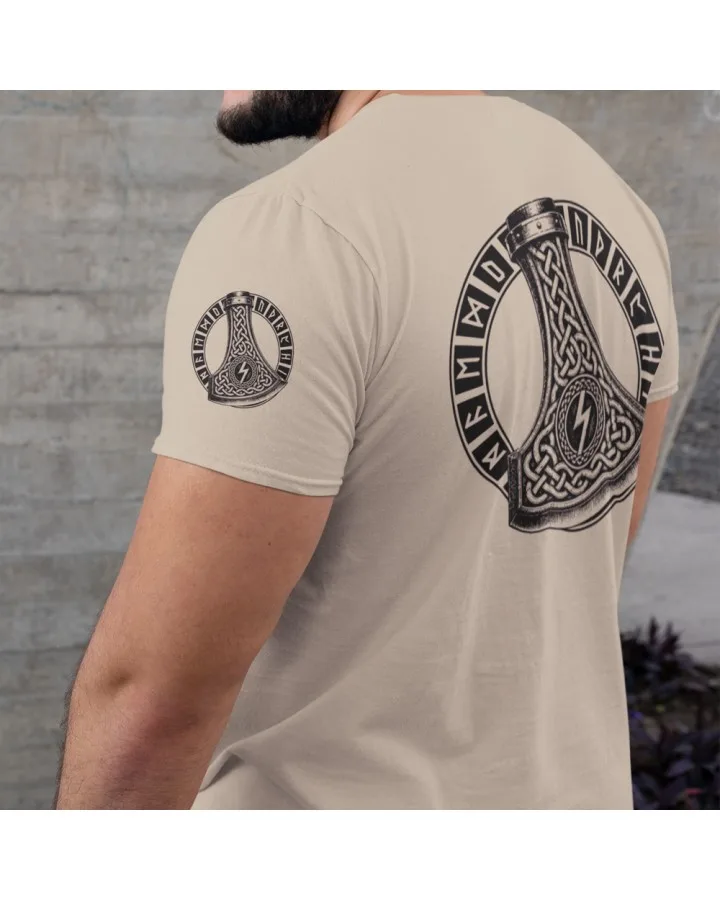
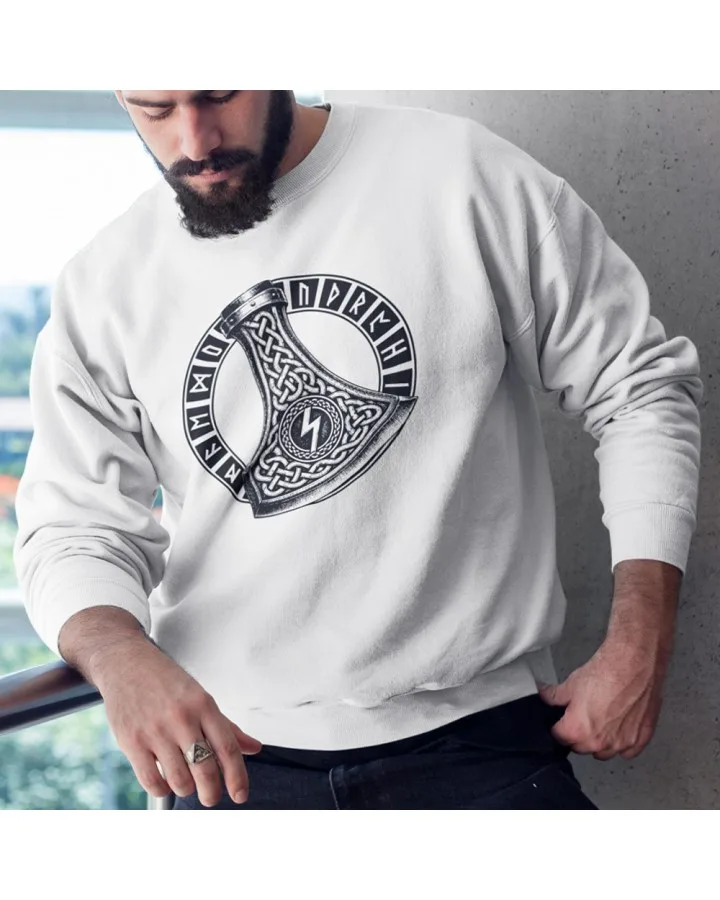
Today the axe is Perun’s most recognisable image. Archaeological miniature axe pendants are linked by some researchers to warrior culture and protection, although not every find can automatically be called an axe of Perun.
The connection still feels inevitable: an axe blow resembles lightning — fast, sharp and final. The modern sign therefore carries strength, protection, resolve, honour and the willingness to withstand impact.
Wood. Fire. Thunder.

The chronicle describes Kyiv’s Perun idol as wooden, with a silver head and golden moustache. For a forest culture, wood was the material of homes, boats, fortifications and sacred space.
Ritual details are fragmentary. Sources mention gifts and sacrifices, and some describe a human lot in pagan Kyiv. A precise reconstruction is impossible today; an honest article should mark that boundary.
WOOD. FIRE. THUNDER.
05
A thunder god in a wider family
Indo-European traditions also contain gods of thunder and heavenly battle: Thor, Perkūnas and Indra. They are not one god under different names, but the parallels are visible — thunder, protection, warrior force and a striking weapon.
The difference matters: Norse texts preserve many stories about Thor, while pre-Christian Rus has left us mostly Perun’s function. He reached us not as a hero of dozens of tales, but as a name used for an oath.

06
Perun today
For some, he is history and mythology; for others, cultural memory; for others, a modern image of strength, protection and responsibility. A symbol on clothing does not make someone part of the past, but it can show which past they consider worth remembering.
That is why the Axe of Perun on a T-shirt or sweatshirt is not a costume. It is a visual code: direct, strong and modern enough to live outside a museum.
EDITORIAL SOURCES
PERUN PIECES
PERUN PIECES ↗